Invoice Processing Automation: The Complete Guide (2026)
Invoice processing automation replaces manual data entry, approval chasing, and paper-based workflows with AI-powered systems that cut cost-per-invoice from EUR 25 to under EUR 4 and processing time from weeks to hours. This guide covers how it works, the five system types, workflow steps, European compliance requirements, and how to choose the right solution for your business size.
Key Takeaway
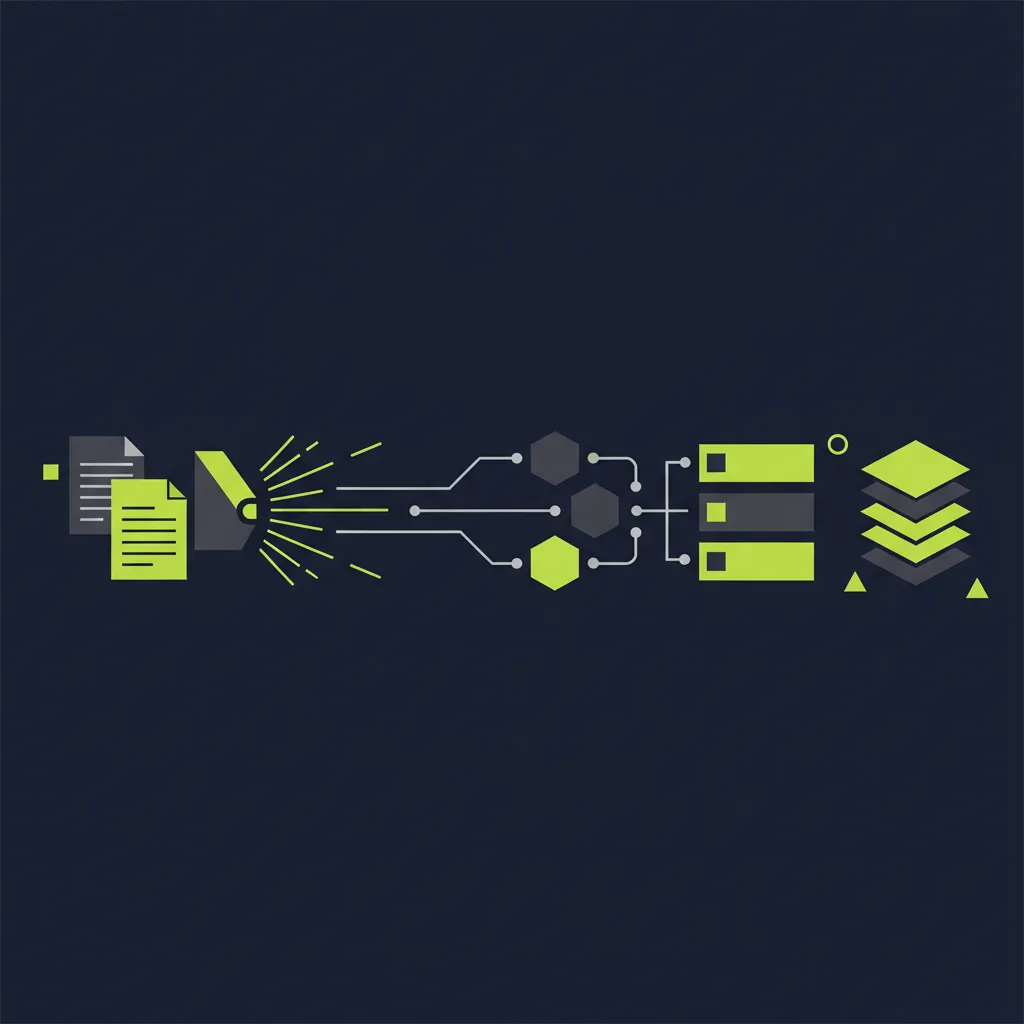
Invoice processing automation replaces manual data entry, approval chasing, and paper-based workflows with AI-powered systems that cut cost-per-invoice from EUR 25 to under EUR 4 and processing time from weeks to hours. This guide covers how it works, the five system types, workflow steps, European compliance requirements, and how to choose the right solution for your business size.
What Is Invoice Processing Automation?
Invoice processing automation is the use of software — combining OCR, artificial intelligence, and workflow rules — to capture, validate, match, route, and pay supplier invoices without manual data entry or paper handling. Instead of a finance team member typing invoice details into an accounting system, the software reads the invoice, codes it, checks it against purchase orders, routes it for approval, and schedules payment automatically.
The core goal is touchless processing: invoices flow from receipt to payment with zero human intervention unless an exception occurs. Modern AI-powered systems achieve touchless rates of 70–90% on invoice volumes, meaning the majority of invoices are fully processed without anyone opening them manually.
For European businesses, automation also addresses regulatory obligations including GDPR data handling, the EU ViDA e-invoicing mandate rolling out through 2028, and multi-rate VAT calculation — tasks that are error-prone when done manually at scale.
Here is how the two approaches compare at a glance:
| Metric | Manual Processing | Automated Processing |
|---|---|---|
| Cost per invoice | EUR 12–25 | EUR 2–4 |
| Processing time | 8–15 business days | 1–3 business days |
| Data entry error rate | 39% of invoices | Under 1% |
| Visibility into status | Spreadsheets and email threads | Real-time dashboards |
| Approval routing | Manual emails, paper sign-offs | Automated workflows with mobile approval |
| Audit trail | Scattered across files, inboxes, and desks | Complete digital trail, GDPR-compliant |
| Staff productivity | Baseline | Up to 6x increase |
Why Does Invoice Processing Matter So Much?
Invoice processing sits at the centre of every business's cash flow. Every purchase you make — from raw materials to software subscriptions — arrives as an invoice that must be validated, approved, and paid. When this process is slow, errors accumulate, supplier relationships suffer, and finance teams spend their time on data entry rather than analysis.
The scale of the problem is significant. 82% of accounts payable teams still manually key invoice data into their accounting systems. The average cost to process a single invoice manually is EUR 12–25, while automated processing brings that cost down to EUR 2–4. Manual processing takes 8–15 business days on average; automation reduces that to 1–3 days.
57% of finance teams cite manual data entry as their biggest challenge, while 47% point to slow approval cycles as a major pain point. These are not just efficiency complaints — slow invoice processing leads to late payment penalties, missed early-payment discounts, and strained supplier relationships that affect your supply chain.
80% of AP leaders expect invoice volumes to increase over the next two years. Scaling a manual process to handle more invoices means hiring more staff. Scaling an automated process typically requires no additional headcount.
How Does Automated Invoice Processing Work? (Step by Step)
Automated invoice processing follows a structured workflow that mirrors what a human AP team would do — but executes each step faster, more accurately, and without fatigue. Here are the six core stages:
Stage 1: Invoice Receipt and Capture
Invoices arrive through multiple channels: email attachments, supplier portals, EDI feeds, scanned paper, PDF uploads, or directly from e-invoicing networks. The automation system monitors all these channels simultaneously. Paper invoices are scanned and digitised. Email invoices are extracted from attachments. E-invoices from structured formats (XML, UBL, Peppol) are ingested directly without OCR.
Stage 2: Data Extraction and Coding
OCR combined with machine learning reads the invoice and extracts key fields: supplier name, invoice number, invoice date, due date, line items, quantities, unit prices, tax amounts, totals, and bank details. AI models trained on millions of invoices achieve extraction accuracy above 98% for well-formatted invoices. The system then automatically applies GL codes, cost centres, and project codes based on supplier rules and historical patterns.
39% of invoices contain errors at the data entry stage when processed manually. Automated extraction eliminates this source of error entirely for structured and semi-structured invoices.
Stage 3: Validation and PO Matching
The system validates extracted data against your rules: does the invoice match a purchase order? Does the quantity and price match the goods receipt? Is the VAT number valid? Is the supplier on your approved vendor list? Two-way matching (invoice vs PO) and three-way matching (invoice vs PO vs goods receipt) happen automatically within seconds.
22% of invoices have a mismatch requiring investigation — this is normal. The automation system flags these exceptions and routes them to the appropriate person for resolution, rather than blocking the entire batch.
Stage 4: Approval Routing
Invoices that pass validation are routed through your approval workflow based on pre-configured rules: invoice amount, department, supplier, cost centre, or project. Approvers receive notifications on email or mobile. They can approve, reject, or query invoices with one click. Automated reminders chase overdue approvals, and escalation rules move invoices up the chain if they sit too long.
Best practices for approval routing: keep approval chains to a maximum of three levels, set amount-based thresholds (e.g., under EUR 500 auto-approved, EUR 500–EUR 5,000 one approver, over EUR 5,000 two approvers), enable mobile approval so approvers are never a bottleneck when travelling, and auto-approve recurring invoices from trusted suppliers once a pattern is established.
Stage 5: Payment Scheduling
Approved invoices are scheduled for payment based on due date, payment terms, and cash flow rules. The system can optimise payment timing to capture early-payment discounts (typically 1–2% for payment within 10 days) while avoiding premature payment that strains working capital. Payment runs are prepared automatically for review, then executed via bank integration, SEPA transfer, or payment platform.
Stage 6: Reconciliation and Archiving
Once payment is made, the system reconciles the payment against the invoice in your accounting system, marks it as paid, and archives the invoice document. The complete audit trail — every action, every approval, every change — is stored and retrievable for GDPR compliance, VAT audits, and financial reporting.
What Are the Five Types of Invoice Automation Systems?
Not all invoice automation systems are built the same way. Choosing the wrong type for your business size or tech stack is a common mistake. Here are the five main categories:
1. Standalone AP Automation Platforms
Dedicated accounts payable automation software that integrates with your existing accounting or ERP system via API. These are typically best for mid-market and enterprise companies with complex approval workflows and high invoice volumes. They offer deep functionality but require integration work. Best for businesses processing 500+ invoices per month with multiple approvers and cost centres.
2. ERP-Native Modules
Built-in AP automation within ERP platforms like SAP S/4HANA, Oracle Fusion, or Microsoft Dynamics 365. If you are already running one of these ERPs, the native module avoids integration complexity. The trade-off is that ERP-native modules often lag behind specialised platforms in AI capability and user experience. Suitable for large enterprises already invested in a major ERP.
3. AI-Native IDP (Intelligent Document Processing) Tools
A newer generation of tools built specifically around AI document understanding. These use transformer-based AI models rather than template-matching, meaning they handle unusual invoice layouts and new suppliers without requiring manual template setup. Best for businesses with highly varied invoice formats or large volumes from many different suppliers. They typically achieve the highest touchless processing rates of any category.
4. Cloud SaaS for SMBs
Affordable, easy-to-deploy platforms designed for small and mid-sized businesses. These integrate with cloud accounting software like Xero, QuickBooks, or Sage and offer invoice capture, approval workflows, and payment scheduling at a monthly subscription cost that scales with volume. Setup time is typically days rather than months. Best for businesses processing 20–500 invoices per month.
5. RPA-Based Solutions
Robotic Process Automation tools that automate invoice processing by mimicking human actions on existing software — logging in, copying data, navigating screens. RPA can automate legacy systems that lack APIs. However, it is brittle: any change to the underlying application interface breaks the automation. Best used as a bridge solution while upgrading core systems, not as a long-term strategy.
How Do You Choose the Right System for Your Business Size?
Business size, invoice volume, and existing technology significantly affect which type of invoice automation system is the right fit. Here is a practical framework:
Small Businesses (1–20 Employees)
At this scale, you are likely processing 20–200 invoices per month. The priority is reducing manual data entry and getting basic approval workflows in place without significant budget or IT time. A cloud SaaS AP tool that integrates directly with Xero or QuickBooks is usually the right choice. Look for: simple setup, email capture, basic two-way matching, one-level approval workflows, and direct accounting sync. Cost should be under EUR 100 per month. ROI is typically achieved within the first month.
Mid-Sized Businesses (20–200 Employees)
At this scale, you are processing hundreds to a few thousand invoices per month, likely with multiple approvers, multiple cost centres, and possibly multiple entities or currencies. You need more sophisticated routing rules, PO matching, multi-currency and VAT handling, and stronger reporting. A standalone AP automation platform or a more capable cloud SaaS product is appropriate. Budget EUR 200–EUR 1,500 per month depending on volume. Expect 2–4 weeks for implementation and integration.
Enterprise Businesses (200+ Employees)
At enterprise scale — thousands of invoices per month, multiple countries, complex approval hierarchies, ERP integration requirements — you need an enterprise-grade AP platform or an ERP-native module. Key requirements include: high-volume OCR and AI extraction, complex multi-level approval workflows, full ERP integration (SAP, Oracle, Microsoft), multi-entity and multi-currency support, e-invoicing network connectivity (Peppol for EU), advanced analytics and dashboards, and dedicated implementation support. Budget for enterprise platforms is typically EUR 2,000–EUR 10,000+ per month plus implementation costs.
What Features Should You Look for in Invoice Processing Software?
When evaluating invoice processing systems, these are the capabilities that separate basic tools from enterprise-grade platforms:
- AI-powered data extraction: Machine learning models that read invoices without template setup, handling varied layouts from new suppliers automatically.
- Multi-format capture: Accepts PDF, scanned paper, email, XML, EDI, Peppol e-invoicing, and supplier portal submissions from a single inbox.
- Two-way and three-way PO matching: Automatically matches invoices against purchase orders and goods receipts, flagging discrepancies for human review.
- Configurable approval workflows: Route by amount, department, supplier type, cost centre, or any combination — with automated reminders and escalation rules.
- Accounting system integration: Native connectors to Xero, QuickBooks, Sage, SAP, Oracle, or Microsoft Dynamics — no manual export/import required.
- Multi-currency and VAT handling: Automatic currency conversion, VAT rate application by country, and VAT number validation — essential for European businesses trading across borders.
- Real-time dashboards: Visibility into invoice status, approval bottlenecks, payment due dates, outstanding liabilities, and processing time metrics.
- Full audit trail: Every action logged with timestamp and user — required for GDPR compliance, VAT audits, and financial controls.
- Supplier portal: Self-service portal where suppliers can submit invoices, check payment status, and update their details — reducing inbound queries to your AP team.
- Mobile approval: Approvers can review and approve invoices from their phone, preventing bottlenecks when people are travelling or out of the office.
- Exception handling: Clear workflows for managing mismatches, duplicate invoices, missing POs, and other exceptions — not just flagging them but routing them through to resolution.
- Scalability: Can the system handle 10x your current volume without re-architecting? Cloud-native SaaS platforms typically scale on demand.
How Does AI Change Invoice Processing?
Traditional invoice automation relied on template matching — you defined a template for each supplier's invoice layout, and the system extracted data based on fixed field positions. This worked for suppliers whose invoices never changed, but broke whenever a supplier updated their format. Adding a new supplier required IT involvement to build a new template.
Modern AI-native systems use transformer-based machine learning models trained on millions of real invoices. They understand the meaning of fields — they recognise "invoice date", "INV DATE", "Date of Issue", and "Rechnungsdatum" as the same thing — without needing a template. This means:
- No template setup: New suppliers are onboarded automatically. The first invoice from a new supplier is processed with the same accuracy as any other.
- Self-improving accuracy: Each correction made by a human (fixing a misread field) trains the model, so accuracy increases over time for your specific supplier base.
- Anomaly detection: ML models flag unusual invoices — amounts significantly higher than usual from a supplier, duplicate invoice numbers, new bank account details — as potential fraud or errors before payment.
- Predictive analytics: AI can predict cash flow requirements based on invoice receipt patterns, flag suppliers at risk of payment disputes, and recommend optimal payment timing.
- Natural language understanding: AI can read unstructured invoice notes, line item descriptions, and terms and conditions to extract relevant information that template-based systems would miss.
The practical result is that AI-powered systems achieve touchless processing rates of 70–90%, compared to 30–50% for template-based systems. On a volume of 1,000 invoices per month, that difference means 400–600 fewer invoices requiring human handling every month.
Streamline Your Financial Operations
Join hundreds of businesses already saving time with FinTask. Get a personalised demo today.
What Are the Measurable Benefits of Automating Invoice Processing?
The business case for invoice processing automation is well-documented. Here are the key metrics drawn from industry research and real implementation outcomes:
| Metric | Manual Processing | Automated Processing | Improvement |
|---|---|---|---|
| Cost per invoice | EUR 12–25 | EUR 2–4 | 60–85% reduction |
| Processing time | 8–15 business days | 1–3 business days | 80% faster |
| Data entry error rate | 39% of invoices | Under 1% | Near elimination |
| Staff productivity | Baseline | 6x more invoices per person | 500% increase |
| Duplicate payment rate | 0.5–1% of invoices | Under 0.1% | 80–90% reduction |
| Exception rate | 22% require investigation | 5–10% after AI pre-screening | 50–75% fewer exceptions |
| Audit readiness | Manual retrieval, hours | Instant search and export | Full real-time visibility |
Beyond cost and time savings, automation delivers strategic benefits:
- Early payment discounts: Faster processing makes you eligible to capture early-payment discounts (typically 1–2%), which often exceed the cost of the automation software itself on higher invoice volumes.
- Supplier relationship quality: Suppliers paid on time, consistently, are more likely to prioritise your orders, offer better terms, and provide flexibility during supply disruptions.
- Finance team redeployment: Staff freed from data entry can focus on cash flow analysis, vendor negotiations, and financial strategy — higher-value work that improves the business rather than just maintaining it.
- Fraud reduction: AI anomaly detection catches duplicate invoices, vendor impersonation, and bank detail changes before payment — losses that manual review frequently misses entirely.
Most businesses report positive ROI within 60–90 days of full deployment, driven primarily by the cost-per-invoice reduction on existing volume.
How Does Manual Workflow Compare to Automated Workflow?
To understand the full scope of what automation changes, here is a direct comparison across the complete invoice lifecycle:
| Workflow Stage | Manual Workflow | Automated Workflow |
|---|---|---|
| Invoice receipt | Emails monitored manually; paper sorted by hand | All channels monitored 24/7; auto-ingested on arrival |
| Data entry | Typed manually — 5–15 minutes per invoice | AI extraction in seconds; 98%+ accuracy |
| GL coding | Applied manually using judgment and memory | Auto-coded from supplier rules and ML patterns |
| PO matching | Manually checked against paper or system records | Automated 2-way/3-way matching in real time |
| Approval routing | Email chains, forwarding, lost approvals | Automatic routing with reminders and escalation |
| Processing time | 8–15 business days average | 1–3 business days average |
| Cost per invoice | EUR 12–25 | EUR 2–4 |
| Error rate | 39% of invoices contain entry errors | Under 1% with AI extraction |
| Throughput | Limited by headcount | Scales to any volume without hiring |
| Visibility | Status unknown until someone checks manually | Real-time dashboard for every invoice |
| Audit trail | Partial; relies on email history | Complete; every action logged automatically |
| Fraud detection | Reactive; spotted after the fact | Proactive; AI flags anomalies before payment |
How Do European Regulations Affect Invoice Processing?
European businesses face a more complex regulatory environment for invoice processing than most other regions. Compliance is not optional — failures carry financial penalties and reputational risk. Here are the key regulatory requirements to understand:
EU ViDA — VAT in the Digital Age
The EU's ViDA (VAT in the Digital Age) directive mandates the phased adoption of electronic invoicing and real-time VAT reporting across all EU member states. By 2028, B2B transactions above certain thresholds in most EU countries will require structured e-invoices (XML/UBL format) transmitted via the Peppol network or national equivalents. Ireland's Revenue Commissioners are currently reviewing their e-invoicing roadmap. Businesses should begin building e-invoicing capability now to avoid a rushed transition.
Invoice processing automation with Peppol connectivity and structured e-invoice support is the correct long-term infrastructure for EU compliance — manual email-based invoice handling will not meet ViDA requirements.
GDPR and Invoice Data
Invoices contain personal data: names, addresses, email addresses, phone numbers, and potentially bank account details. Under GDPR, this data must be stored securely, access-controlled, retained only for as long as legally required (Irish Revenue requires 6 years), and deletable on request where legally permitted. Automated invoice systems must implement role-based access controls, encrypted storage, audit logs of who accessed what, and data retention policies.
Automated systems handle this more reliably than manual processes — paper invoices in filing cabinets or emails in shared inboxes are inherently GDPR non-compliant by design.
VAT Handling
Irish and EU VAT rules require precise handling of multiple rates (23%, 13.5%, 9%, 0%, and exempt), reverse charge for B2B cross-border services, intra-community acquisitions, import VAT, and VAT number validation on EU supplier invoices. Errors in VAT coding can result in Revenue audits and penalties. Automated systems apply VAT rules consistently and validate supplier VAT numbers against the VIES database in real time.
SEPA Payments
The Single Euro Payments Area (SEPA) provides standardised bank transfer formats across 36 European countries. Invoice processing automation should integrate with SEPA Credit Transfer for payment execution, enabling straight-through payment from approved invoice to bank transfer without manual re-keying of IBAN and BIC details — a common source of costly payment errors in manual workflows.
Revenue Compliance
Irish businesses must maintain records that satisfy Revenue Commissioners requirements. Automated invoice processing creates the detailed, searchable, timestamped records that Revenue expects — far more reliable than paper files or scattered spreadsheets. This makes audits faster and less stressful, and reduces the risk of penalties from incomplete or inaccurate record-keeping.
How Do You Implement Invoice Processing Automation Successfully?
Implementation is where many automation projects fail — not because the technology does not work, but because the rollout was not planned carefully. Here is a proven implementation approach:
Step 1: Map Your Current Process
Before choosing software, document exactly how invoices flow through your business today. How many invoices do you receive per month? From how many suppliers? Via which channels (email, post, EDI)? How many approvers are involved? What accounting system do you use? Where do invoices get stuck most often? This analysis identifies your biggest pain points and informs your requirements.
Step 2: Define Goals and KPIs
Set measurable targets: reduce cost per invoice from EUR 18 to under EUR 5, reduce average processing time from 12 days to 3 days, achieve 70% touchless rate within 6 months. Having clear KPIs lets you evaluate vendor claims objectively and measure success post-implementation.
Step 3: Choose Your Solution
Use the business size framework above to narrow your options. Evaluate 2–3 shortlisted vendors with a structured proof of concept: run 100 real invoices through each system and measure extraction accuracy, exception rates, and user experience. Check references from companies similar to yours in size and industry. Confirm GDPR compliance, EU data residency, and accounting integration quality before committing.
Step 4: Clean Your Master Data
Automation amplifies whatever is in your system. Before go-live, clean your supplier master data — remove duplicates, verify bank details, confirm VAT numbers, set up GL coding rules and approval hierarchies. This is unglamorous work but it determines whether your first week of automation is smooth or chaotic.
Step 5: Roll Out in Phases
Start with a single invoice type or supplier group — for example, all utility invoices or all invoices from your top 20 suppliers. This limits the blast radius of any teething issues. Once that cohort runs smoothly at high touchless rates, expand to the next group. Trying to automate all invoice types on day one is a common mistake that leads to overwhelmed support teams and user frustration.
Step 6: Train and Optimise
Train all users — approvers, AP staff, managers — before go-live, not after. Set up exception review workflows and assign clear ownership. In the first 90 days, review extraction accuracy weekly and correct any systematic errors to train the AI model. Monitor your KPIs monthly and fine-tune rules to improve touchless rates over time. Continuous optimisation is what turns a functional automation into a high-performing one.
What Should You Expect in Terms of ROI and Payback Period?
The financial return on invoice processing automation is typically strong and fast. Here is how to calculate it for your business:
Cost Savings Calculation
Take your current monthly invoice volume and multiply by your current cost per invoice. For a company processing 500 invoices per month at EUR 18 per invoice, the current cost is EUR 9,000 per month. At an automated cost of EUR 3.50 per invoice, the new cost is EUR 1,750 per month — a saving of EUR 7,250 per month, or EUR 87,000 per year.
Against this, the typical cost for a cloud AP automation platform serving a company of this size is EUR 400–800 per month. Net annual saving after software cost: EUR 75,000–83,000. Payback period: less than 2 months.
Additional Value Streams
The cost-per-invoice saving is the baseline. Additional value comes from:
- Early payment discounts: Capturing 1% discount on 30% of your invoice volume adds significant annual value at scale.
- Duplicate payment recovery: At a 0.5% duplicate rate on EUR 2M annual spend, that is EUR 10,000 per year being recovered or prevented.
- Staff reallocation: If automation frees 0.5 FTE from manual processing, that person can do higher-value work — a capacity gain without an additional hire.
- Late payment penalty avoidance: Faster processing means fewer late payment penalties — typically 2–8% of invoice value under EU late payment regulations.
Most businesses report full ROI within 60–90 days of complete deployment, with ongoing benefits compounding as invoice volumes grow.
What Are the Most Common Invoice Processing Challenges and How Does Automation Solve Them?
Finance teams encounter the same problems repeatedly in manual invoice processing. Here is how automation addresses each one:
Challenge: Manual Data Entry Errors
The problem: 39% of invoices contain errors at the data entry stage — wrong amounts, wrong GL codes, wrong supplier details. These errors cause payment disputes, audit issues, and reconciliation headaches at month-end. The solution: AI extraction eliminates manual keying. Validation rules catch format errors. The error rate drops below 1%.
Challenge: Slow Approval Cycles
The problem: Approvers are travelling, on leave, or simply not checking their email. Invoices sit in inboxes for days. 47% of finance teams point to slow approvals as their primary bottleneck. The solution: Automated reminders, escalation rules, and mobile approval apps ensure invoices never wait more than 24 hours for a response.
Challenge: Duplicate Invoices and Fraud
The problem: Suppliers occasionally re-submit invoices. Fraudsters send fake invoices or change bank details on existing supplier accounts. Manual review catches some but not all. The solution: Automated duplicate detection flags any invoice with a matching number, amount, or supplier within seconds. AI anomaly detection flags bank detail changes and unusual amounts for manual review before payment is executed.
Challenge: Poor Visibility
The problem: Finance managers do not know how much they owe, to whom, or when. Cash flow forecasting is guesswork. The solution: Real-time dashboards show every invoice status, total outstanding liabilities, upcoming payment obligations, and cash flow projections — available to anyone with the right permissions, at any time.
Challenge: Scaling Without Hiring
The problem: As the business grows, invoice volume grows. The only way to keep up manually is to hire more AP staff. 80% of AP leaders expect invoice volumes to increase — automation is the only sustainable response. The solution: Automated systems scale to handle 10x volume with the same team size and no degradation in accuracy or speed.
Frequently Asked Questions
What is invoice processing automation?
Invoice processing automation is software that uses AI, OCR, and workflow rules to capture, extract data from, validate, match, route for approval, and schedule payment of supplier invoices — without manual data entry. Modern systems process 70–90% of invoices completely automatically (touchlessly), only involving humans when an exception occurs such as a PO mismatch or duplicate suspicion.
How much does invoice processing automation cost?
Cloud-based AP automation for small businesses typically costs EUR 50–200 per month. Mid-market platforms range from EUR 200 to EUR 1,500 per month. Enterprise platforms can cost EUR 2,000–10,000+ per month plus implementation fees. Even at the higher end, most businesses recoup the cost within 60–90 days through reductions in cost-per-invoice (from EUR 12–25 manually to EUR 2–4 automated) and staff time savings.
How long does it take to implement invoice processing automation?
Cloud SaaS tools for small businesses can be set up in 1–5 days. Mid-market platforms with accounting integrations typically take 2–6 weeks. Enterprise implementations with ERP integration, multi-entity setup, and complex workflows take 2–6 months. The largest time investment is usually cleaning supplier master data and configuring approval hierarchies — not the software itself.
What is touchless invoice processing?
Touchless invoice processing means an invoice is processed from receipt to payment approval without any human intervention. The system automatically captures the invoice, extracts all data, validates it, matches it to a purchase order, routes it for approval (or auto-approves based on rules), and schedules payment. Modern AI systems achieve touchless rates of 70–90% on typical invoice volumes, with the remainder handled by humans only when genuine exceptions arise.
Does invoice processing automation work with paper invoices?
Yes. Paper invoices are scanned — via scanner, mobile phone camera, or physical mail scanning service — and then processed using OCR and AI extraction. Modern AI systems handle poor-quality scans and unusual layouts far better than older template-based systems, achieving over 95% accuracy even on non-standard formats. The same automation pipeline processes paper, PDF, email, and e-invoicing formats from a single workflow.
What is three-way matching in invoice processing?
Three-way matching is an automated validation check that compares three documents: the purchase order (what you agreed to buy), the goods receipt (what was actually delivered), and the supplier invoice (what you are being asked to pay). All three must match in quantity, price, and specification before the invoice is approved for payment. Two-way matching compares only the purchase order and invoice, which is sufficient for service invoices where there is no physical goods receipt.
Is invoice processing automation GDPR compliant?
A well-configured invoice automation system is more GDPR-compliant than manual processes. It provides role-based access controls so only authorised users see invoice data, encrypted storage, complete audit logs of every access and action, configurable data retention periods (Irish Revenue requires 6 years), and the ability to delete or anonymise personal data on request where legally permitted. Paper-based or email-based invoice handling typically lacks these controls entirely.
What is the EU ViDA e-invoicing mandate and how does it affect invoice processing?
The EU's VAT in the Digital Age (ViDA) directive requires B2B businesses in EU member states to issue and receive structured electronic invoices (XML/UBL format) for transactions above certain thresholds, with real-time VAT reporting to tax authorities. The mandate is rolling out progressively through 2028 across EU countries. Invoice processing automation with Peppol network connectivity and structured e-invoice support is the correct infrastructure to meet ViDA requirements — manual email-based processes will not comply.
Can small businesses benefit from invoice processing automation?
Yes. Even businesses processing 20–50 invoices per month benefit significantly. At 50 invoices per month saving 10 minutes of manual handling each, that is over 8 hours per month returned to the business. Cloud SaaS tools designed for SMBs cost under EUR 100 per month and integrate directly with Xero or QuickBooks. The ROI is typically positive from the first month for any business where staff time has a meaningful cost.
What is the difference between OCR and AI in invoice processing?
OCR (Optical Character Recognition) converts images of text into machine-readable characters — it reads pixels and identifies letters and numbers. AI then interprets what those characters mean: it understands that '14/03/2026' next to the label 'Invoice Date' is the invoice date, even if that label format varies between suppliers. OCR without AI requires templates; AI-powered systems understand invoice layouts without templates, giving much higher accuracy on varied and new supplier formats.
How does invoice processing automation handle exceptions?
When an automated system encounters an invoice that does not match a PO, has an unusual amount, or fails a validation rule, it routes the exception to a designated user for resolution — rather than blocking the entire queue. Exception workflows specify who handles each type of mismatch, what information they need to see, and what actions they can take (approve with override, reject, query supplier, put on hold). Well-designed exception workflows keep the 5–22% of problem invoices moving without blocking the 78–95% that are clean.
What ROI can businesses expect from invoice processing automation?
Most businesses see positive ROI within 60–90 days of full deployment. The primary driver is cost-per-invoice reduction: from EUR 12–25 manually to EUR 2–4 automated. Secondary benefits include early payment discount capture (typically 1–2% for payment within 10 days), duplicate payment elimination (0.5–1% of invoices), and staff reallocation from data entry to higher-value work. At 500 invoices per month, the cost saving alone is typically EUR 7,000–10,000 per month — well above software subscription costs at any tier.
Does invoice processing automation integrate with accounting software?
Yes. Most AP automation platforms offer native integrations with major accounting systems: Xero, QuickBooks, Sage, FreeAgent, SAP, Oracle, and Microsoft Dynamics. Integration means approved invoices are automatically posted to the correct accounts in your accounting software, payments are reconciled automatically, and there is no manual export or import between systems. Always verify the platform has a current, maintained integration with your specific accounting software version before committing.
What percentage of invoices can be processed without human intervention?
The industry term for fully automated processing is the touchless rate. Template-based systems typically achieve 30–50% touchless rates. Modern AI-native systems achieve 70–90% touchless rates on typical business invoice volumes. The remaining 10–30% require human review due to exceptions such as PO mismatches, duplicate suspicions, or missing data. Touchless rates improve over time as the AI model learns your supplier base and as you refine your validation rules and auto-approval thresholds.
Ready to Automate Your Accounting?
See how FinTask can save your team hours every week with AI-powered automation. Book a free consultation to get started.

Written by Reza Shahrokhi ACA
Chartered Accountant (Chartered Accountants Ireland) • Founder of FinTask • 8+ years in finance & automation
Reza is a Chartered Accountant and the founder of FinTask. He specialises in helping growing businesses automate accounts payable, invoice processing, and financial reconciliation using AI-powered tools integrated with Xero and QuickBooks.
More about the authorRelated Articles
Best Invoice Processing Automation Software Compared
A side-by-side comparison of the best invoice processing automation software in 2026, covering features, pricing, OCR accuracy, and which tool fits your business size and accounting stack.
11 min readInvoice AutomationAI Invoice Processing: How AI Transforms Invoicing
How AI is transforming invoice processing for businesses. From OCR and machine learning to smart matching and approval routing -- a practical guide to what AI invoice tools can (and cannot) do.
9 min readAP AutomationThe Complete Guide to Accounts Payable Automation (2026)
Everything you need to know about accounts payable automation in 2026 — how it works, RPA vs AI, measurable ROI, implementation steps, and how to choose the right AP automation system for your business.
17 min readAccounting AutomationAccounting Automation: The Complete Guide
A comprehensive guide to accounting automation for growing businesses. Discover which tasks to automate first, compare the best tools, follow a step-by-step implementation plan, and learn how FinTask connects Xero, Shopify, and Stripe into one intelligent workflow.
22 min read